About
Aikido is a modern Japanese martial art. At Columbia we practice the Kokikai style — here is what that means.
What is aikido?
Aikido is a modern Japanese martial art that trains the coordination of mind and body to develop calmness in action. It is a highly effective system of self-defense that does not depend on muscular strength, and its techniques can work without harming the attacker, making comfortable, ethical self-defense the ideal.
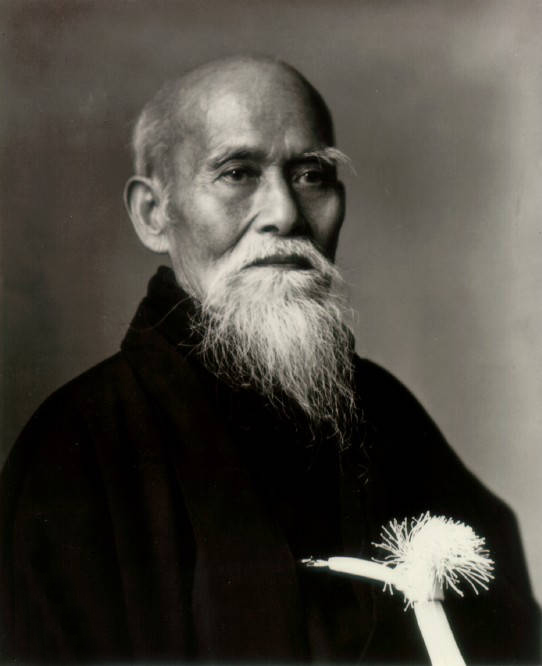
It came to prominence in the mid-twentieth century. Its founder, Morihei Ueshiba O'Sensei ("great teacher"), trained in Daito-ryu Aiki-jujutsu and several weapons arts before reimagining what a martial art could be: "To smash, injure, or destroy is the worst thing a human being can do. The real Way of a Warrior is to prevent such slaughter — it is the Art of Peace, the power of love." The goal every practitioner works toward is to set aside the instinct to retaliate against an attacker.
When someone hits us, the natural reaction is to hit back. Our discipline is to put that reaction aside, so as not to perpetuate the cycle of harm. Our techniques use an attacker's own force and energy to neutralize an attack without injury. That ideal is not always reachable, but it is what we practice toward.
If any of this speaks to you, come visit a practice and try it.
The Kokikai style
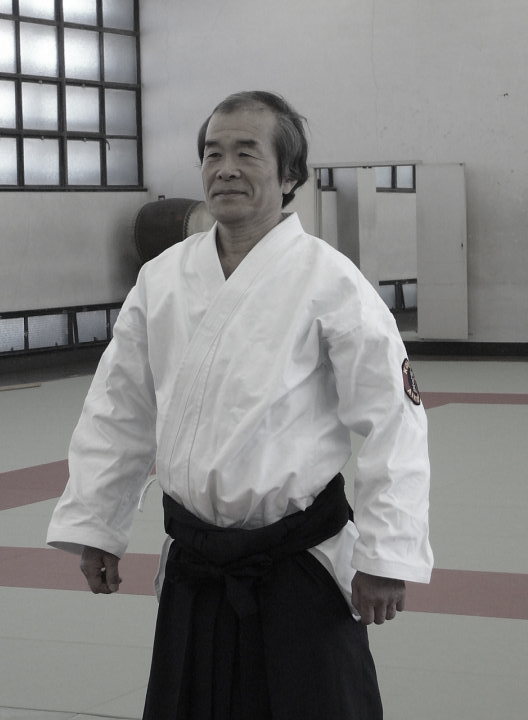
Aikido Kokikai was founded by Shuji Maruyama Sensei, an uchideshi (a student who lived in the dojo) of O'Sensei Ueshiba. One of the first aikido instructors sent from Japan to America, Maruyama Sensei came to the United States in 1966. There are now more than fifty Kokikai dojos worldwide, including in the United States, Canada, Australia, Israel, Russia, and Japan.
Our club is part of Aikido Kokikai Federation USA, the style's national body. If you move or travel, you can find another Kokikai dojo through the federation.
Kokikai is a logical training system with concrete goals: effective self-defense and the development of each person's full potential through the correct state of mind and body. It uses Ki testing and specific resistance to technique to lead practitioners toward deep self-discovery, then applies that correct state to self-defense and to everyday life.
Aikido has been part of student life at Columbia since 1987. Come join us in realizing your full potential through Kokikai training.
How ranks work
Kokikai uses the traditional kyu and dan system. Students begin at the highest-numbered kyu and work down: our grading syllabus runs from 6th Kyu to 1st Kyu. After 1st Kyu comes shodan, first-degree black belt, and the dan ranks count upward from there.
Adults mark the kyu grades with colored belts, two grades to a color: orange, then blue, then brown. Shodan brings the black belt and the hakama, the pleated trousers worn from that rank on. The lower kyu tests are held at the club and recorded in your passbook; brown-belt and black-belt gradings take place at the federation's annual camps under its official delegates. What each rank asks for is laid out in the testing requirements.
- 六級 6th kyu orange 2 months · 16 hours
- 五級 5th kyu orange 3 months · 26 hours
- 四級 4th kyu blue 5 months · 44 hours
- 三級 3rd kyu blue 7 months · 62 hours
- 二級 2nd kyu brown 9 months · 72 hours
- 一級 1st kyu brown 10 months · 88 hours
- 初段 shodan black black belt and hakama
Minimum time and mat hours before each test, from the club syllabus.
Rank is not the point of practice. It is a way to see, over time, that your one point, your relaxation, your posture, and your positive mind are getting steadier — not a contest with anyone else.
Weapons
Most Kokikai practice is empty-handed, but training also includes three wooden weapons: the jo (a staff about 50 inches long), the bokken (a wooden sword), and the tanto (a wooden knife). Some techniques defend against them; others use the weapon itself to drill movement.
A weapon magnifies what the body is already doing. Holding a bokken, every flaw in posture, distance, and timing shows at the tip, so weapons work sharpens the same principles as empty-hand technique. You will meet these terms and more in the glossary.
jo
a straight wooden staff
about 50 inches
bokken
a wooden practice sword
tanto
a wooden knife
What to wear
For your first classes you need nothing special — just loose, comfortable clothes you can move and stretch in, like a t-shirt and sweatpants. Come as you are and try it.
Once you decide to keep training, aikidoka practice in a white gi, the standard cotton uniform. The club runs group orders for gi, belts, and Kokikai patches, so you do not have to track one down yourself. When you are ready to begin, see the join page.
See it in action
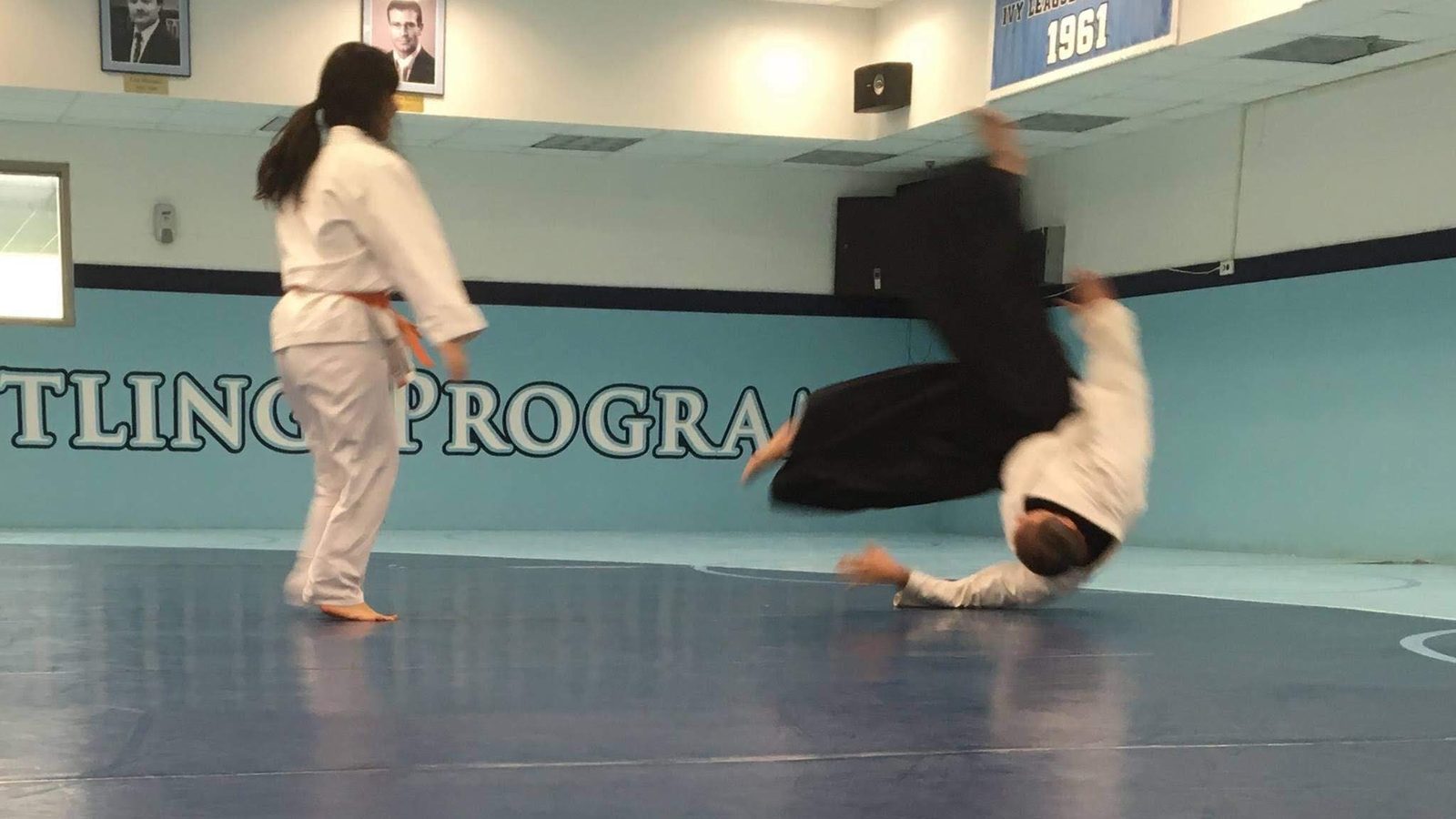
Practice footage is on the way. Until then, the best look is in person — you are welcome to watch a class at any point in the semester before you decide.